
5 DAYS IN INSTANBUL

Updated: Sep 17
Summer of 2026
One of the most unique features of Istanbul is that it straddles both Europe and Asia across the Bosphorus Strait. If we think about comparing Europe and Asia, we would think that these two continents could not be more different in their culture, their tradition, their people, their land. But Istanbul shows you how these borders and divisions are all man-made and only on paper. It is possible for humans to co-exist harmoniously and seamlessly.

In this blog I will break down what we did in Istanbul. What we saw, what we ate, where we shopped, and much more. So read on.
Day 1: Cihangir, Beyoğlu District
We landed in Istanbul in the afternoon. By the time we checked into our Airbnb it was early in the evening. We were quite hungry by then. Luckily, we had chosen the Cihangir area of Beyoğlu District as our home in Istanbul.
Cihangir is a very trendy, bohemian neighbourhood that is home to numerous artistic coffee shops, gourmet stores, as well as chic bistros. So, we just dumped our luggage and popped out to explore. It was a Friday evening and the streets were popping with a hip crowd, ready to unwind for the weekend.
Talk about being at the right place at the right time!

Day 2: Galata Tower | Balat
We set off on foot to the Galata Tower. This 14th Century stone tower is nine-storey high with a 360-degree observation deck. The ticket office is located at the ground floor entrance of the tower. Also, several licensed tourism platforms sell Galata Tower tickets with the option to select a time slot or even a skip-the-line option. I would suggest booking the ticket online so you don’t waste time once at the tower.

Just opposite the Galata Tower is the Viyana Kahvesi, popular, highly-rated café. The café is viral for its San Sebastian Cheesecake that you absolutely must try. This cheesecake is drenched in a thick layer of melted liquid chocolate. Yummm!!

After this delicious break, we took the ferry to Balat. Balat is a very atmospheric neighbourhood with colourful houses, colourful steps, cobbled streets, quaint cafés, and so much more.

Do drop in at Café Naftalin which is a cozy, vintage-style neighbourhood café with a very homely atmosphere. It is like stepping back into an old nostalgic era. It even has an old type-writer on the wall as a part of its décor! And of-course you cannot miss the cats that you will find sleeping cozily everywhere inside. The menu comes in the form of a vintage letter in an envelope. How cool is that!

Day 3: Kuzguncuk | Galataport
On day three we took the ferry to the Üsküdar District of Istanbul. This falls on the Asian side of the Bosphorus. We had scheduled a walking tour of Kuzguncuk. Our guide Anil was extremely knowledgeable and made this tour a fun experience. The neighborhood features narrow streets lined with colourful 19th-century Ottoman wooden houses. Its main street Icadiye Caddesi, has chic cafés on both sides. One such café is the Nail Kitabevi Kafe which is a bookstore and a café! I could spend the whole day here…
Another unique feature of this area is Kuzguncuk Bostanı, a rare, centrally located green community garden containing small plots that are rented out to locals and maintained by them. We saw tomatoes and chillies growing there with butterflies flitting around the garden.

To end the tour, Anil took us to this old coffee shop called Kurukahveci Hafız Ahmet, for some traditional Turkish coffee. This coffee shop is known for its nostalgic, vintage design that feels like a step back in time into an old-world Ottoman coffee house. It specializes in authentic, slow-brewed traditional Turkish coffee made from carefully blended and roasted beans.
Back in the European side, in the evening we visited the Galataport area. This is a newly developed waterfront in Karaköy. We walked along the Bosphorus enjoying the moonlight shimmering on the water while the gentle breeze made the summer evening pleasant. The 1.2 km promenade has Bosphorus-view fine dining restaurants as well as street food options. We ate the street food and then went for some post-dinner cocktails at one of the fine-dine restaurants. Best of both worlds!
Day 4: Blue Mosque | Hagia Sophia | Grand Bazaar | Sunset Cruise
We began the day early with a full-fledged Turkish breakfast. More on that later. After a scrumptious meal we went to visit the Blue Mosque. The original name of this mosque was Sultan Ahmed Mosque. The interiors are decorated with around 20,000 turquoise-coloured, handmade Iznik tiles giving the whole interior a predominantly blue hue, leading to the nickname ‘The Blue Mosque’.
Entrance to this mosque is free. Both men and women are required to cover their knees and shoulders before entering the mosque and women must also cover their head. But don’t worry, scarves and wraps are available at the entrance if needed. Maintain silence and decorum when inside the mosque and immerse yourself in its serene atmosphere as you marvel at the architecture.
The Hagia Sophia, a world-famous historic landmark just across the Blue Mosque has a very interesting history.
It was constructed as an Orthodox Christian Cathedral between 532 and 537 AD.
In 1453 the building was turned into a mosque. Workers added Islamic features like minarets, a mihrab, and large calligraphic roundels.
In 1935 the building became a secular museum.
In 2020, authorities changed its status back into an active mosque.
The structure has stood the test of time. People come and go, giving it different names and meanings. History is witness to the unchecked ego of human beings.
Anyways, the entrance to Hagia Sophia is ticketed.

In the afternoon we visited the Grand Bazaar. The Grand Bazaar in Istanbul is one of the oldest and largest covered markets in the world. This bazaar with its maze of shops is called Kapalı Çarşı, literally meaning ‘Covered Market.’ There are 24 gates through which you can enter the Grand Bazaar. Each street, alley, or corner of the bazaar is dedicated to a particular craft or item. For example, one area has all leather items, another has spices, while yet another has your Turkish carpets.
It is a surreal experience to imagine that you are walking in a place that has been standing here for more than 500 years! You will hear calls of “Hoş geldiniz” (welcome) fill the air as the merchants woo you to come and sample their wares. But do be prepared to bargain. Even the shopkeepers expect it and it is a part of the culture of the Grand Bazaar.

In the evening we went on a sunset cruise over the Bosphorus. There are generally two options for sunset cruises. You can take a regular, shared ferry or a private one. There is no difference in the sunset views, obviously, only in the prices. If you want to celebrate a special occasion then you should opt for a private cruise. Otherwise, a shared ferry is your best bet.

Either way, don’t miss this. The view of the sunset over the Bosphorus will remind you of the famous tagline – there are some things money can’t buy.
Day 5: Istiklal Street Shopping | Rooftop Bar at Sunset
We reserved our last day in Istanbul for shopping. For that we spent the day on Istiklal Street. This is a pedestrian avenue that runs from Taksim Square to Tünel. Apart from popular Turkish brands like Mavi, LC Waikiki, DeFacto, and Koton, you also have local stores selling everything from hand-painted Izmic ceramics, to Turkish carpets, souvenirs, and traditional sweets and spices.

While shopping, watch out for the Istiklal Street Tram known as the T2 Nostalgic Tram line.
This is an iconic red vintage tram that runs the length of Istikal Street. This tram operates between 07.00 a.m. and 10.00 p.m. and runs once every 40 minutes. The tram cars are small and are often full. They also run very slowly since they run through a pedestrian only street.
So, I would suggest just look out for them and click a cool video for Instagram and skip the ride.

As a family we have a ritual of dressing up and doing something special on the last night of our stay in any city. In Istanbul we felt the best way to bid goodbye to this fabulous city, would be to enjoy a sunset from one of the many rooftop bars this city is famous for. We opted for the Monkey Istanbul. This is a very happening cocktail bar featuring a rooftop terrace with amazing views of the waterway, and hip music.
What a great last night we had, sipping fancy cocktails, swaying to the songs, as the sun set slowly over the Bosphorus turning the city pink and orange.
Turkish Food
Turkish food is a fantastic blend of Mediterranean, Middle Eastern, and Central Asian cuisine. It is a slightly meat-heavy cuisine with vegetables, bread and/or rice on the side. Each and every dish we tasted was so, so, good that this itself could have been another blog!
Let me list down 10 dishes we enjoyed on this visit.
Turkish Breakfast: A traditional Turkish breakfast is a rich, communal spread of small plates, fresh bread, and warm egg dishes. And of course, rounded off with Turkish tea and coffee. You will find an assortment of spreads, dips, and fresh produce like sliced tomatoes and cucumber, rich clotted cream served with honey, assorted jams, olives, a variety of cheeses and so much more.
In eggs my favourite was the Çılbır. These are poached eggs served over garlic yogurt with pepper-infused butter. You also have the Menemen which are eggs scrambled with tomatoes, green peppers, and spices.
Some of the breads we had on the table:
Simit - circular bread rings encrusted with roasted sesame seeds
Ekmek - standard Turkish white table bread
Pide - fluffy, shareable flatbread
Börek - savoury, flaky phyllo pastries filled with cheese, spinach, or meat
Lahmacun: a thin, crispy flatbread topped with a savoury mixture of minced meat, vegetables, and herbs, often called ‘Turkish pizza’.
Gözleme: a traditional, savoury Turkish flatbread made from thin hand-rolled dough that is stuffed with various fillings and cooked on a hot griddle.

Midye Dolma: fresh mussels stuffed with spiced, herbed rice.
Balik Ekmek: a sandwich of a filet of fried or grilled fish, served along with various vegetables, inside a bun of Turkish bread.
Köfte and Kebab: köftes are seasoned ground meat patties or meatballs and kebabs are meat dishes that are either roasted, grilled, or skewered. Some of the kebabs that we tried were Adana Kebab, Doner Kebab, and Iskendar Kebab.
Kumpir: generously stuffed Turkish baked potatoes packed with various fillings. The entire potato along with the jacket is baked, but the inside is thoroughly mashed with butter and melted cheese to create a rich, creamy base before adding an extensive variety of cold and hot toppings.

Baklava: a rich, sweet dessert made with layers of thin dough filled with chopped nuts (mainly pistachios) and dipped in syrup. OMG! It is to die for! And the best Baklavas in Istanbul are to be found at any of the Mado outlets. A definite must-have.
Turkish Tea: locally called çay (pronounced chai), this is the ultimate symbol of hospitality and community connection in Turkey. You will be offered tea at shops and establishments as well as for free at the end of your meal in most restaurants. And note that it is taken as an insult to refuse, so please take the offered çay and enjoy it.
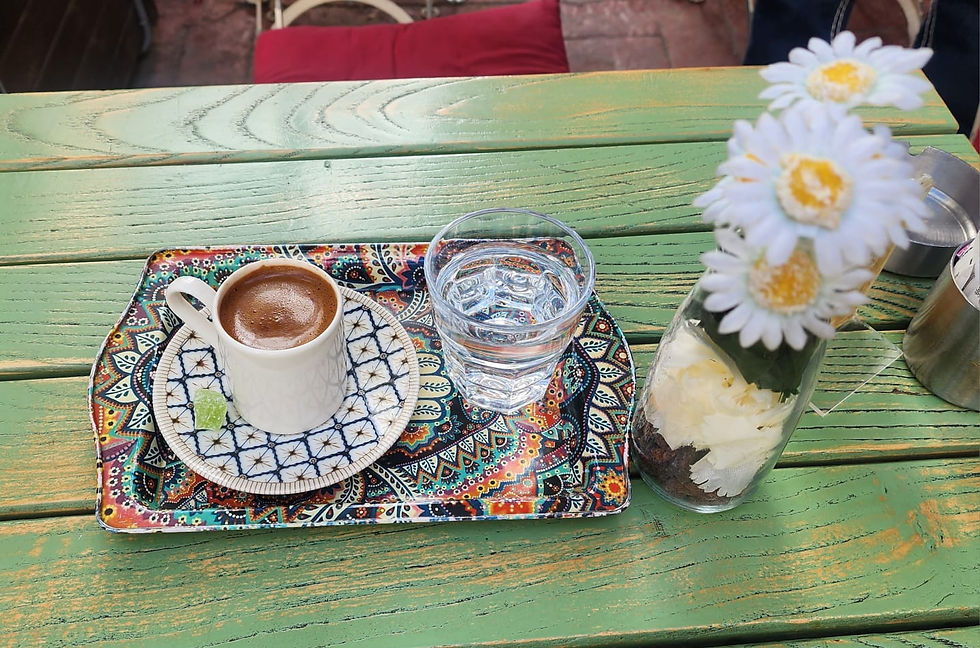
Turkish Coffee: a style of coffee prepared in a pot called a cezve using very finely ground coffee beans without filtering. Coffee in Turkey is always offered with a glass of water and a small sweet like a Turkish delight. Take a small sip of water before the coffee to clean your palate. This will help you fully taste the rich, bold aroma of the coffee. A sip afterwards helps rinse away any lingering residue. The sweet is just to balance the bitterness of the strong coffee and is a classic sign of hospitality in Turkish culture.
As they say in Turkey – Afiyet Olsun!
Aah Istanbul. It is not a city you just visit, it is a city you feel. It is chaotic, beautiful, friendly, and totally unforgettable!
Have I convinced you to visit Istanbul? If yes, get in touch with our team at Travel Scrable for visa, flights, and a package customized specifically for you. Comment ISTANBUL and my team will connect with you


Comments